This year we decided to celebrate Independence Day by taking a look at some of the past year’s biggest threats to the free access of information. Many of these stories are about press freedoms, both here in the United States and around the world. Several are about online freedoms that have recently come under fire. A handful are about the straight-up dictatorial shutting down of access to facts.For the most part, it ain’t a pretty picture, but there are a few points of light floating on the surface of this dark ocean. We’re living in disturbing times. If you want to keep your rights, you’re going to have to fight for them.Steven Robert Allen, Christie Chisholm, Amy Dalness, Marisa Demarco, Laura Marrich and Devin O’Leary all contributed to this article.
Feature
 Jeremy Eaton
Digital Freedom
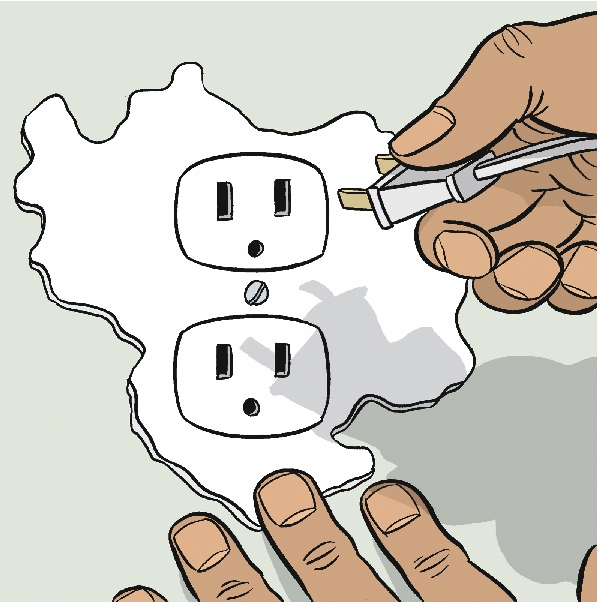
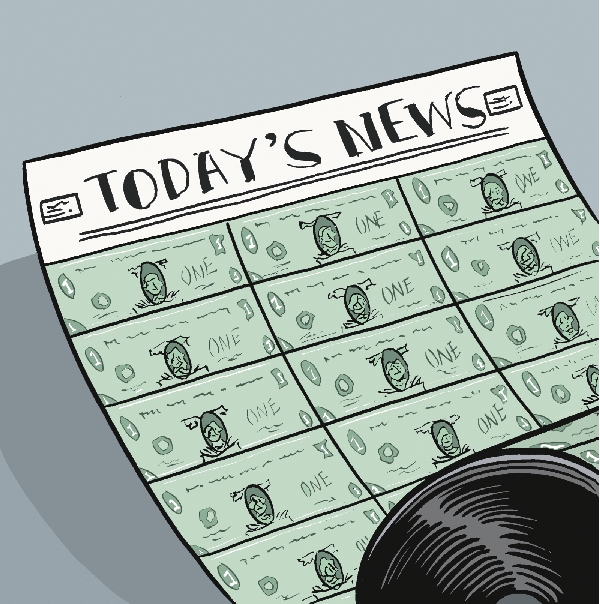
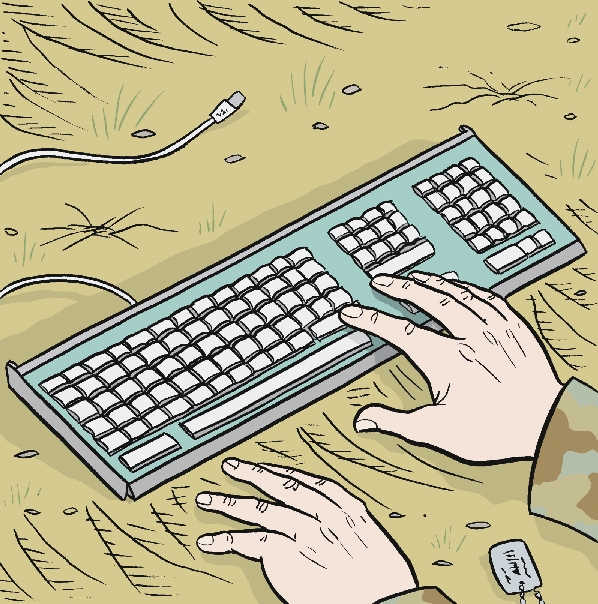
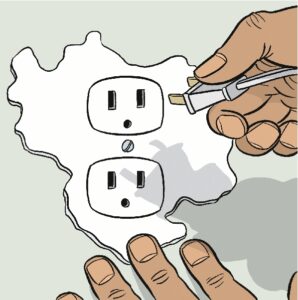
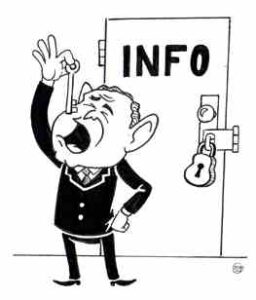
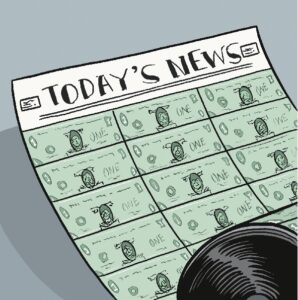
Going Dark Loose lips sink ships, but who is more deserving of the right to free speech than a soldier? Miliblogs offer a firsthand account of the conflict in Iraq, and new rules about soldiers’ blogs have caused many to go dark. In August, the Department of Defense ordered that no information be posted without consent by a commanding officer. In many ways, this is only a slight increase in the stiffness of already stern rules regarding soldiers’ blogs. Wired.com followed the story extensively and notes that the regulations signal a culture clash between "military traditions of censorship and the expectations of young soldiers weaned on open digital culture." These days, even most of the embedded reporters have gone home and primary accounts of attacks and warfare decrease in our media. Miliblogs may have been one of our last sources of real information about the actions of our country. Check out The Blog of War at www.blackfive.net for more information. (MD) Shushing the Internet When you go to a website and it loads really slowly, you assume it’s your connection, or maybe the site has too much junk on it. In the future, that might not be such a safe assumption. Telephone and cable giants AT&T, Verizon, Comcast and Time Warner want to be able to decide which websites load fast and slow, and which ones won’t load, period. It’s not a bad business move. They can charge sites that want to ensure quick data delivery. They can cause their competitors to crawl along or not show up at all, limiting our access to information. Net neutrality is a big part of the reason users hold power and control on the Internet. Everyone’s vying for your hits, your attention, your interest and dollars. But if they can stamp out competitors, uneven the playing field, why bother with the display? You’ll get what you get, not what you want. Go to www.savetheinternet.com for more information. (MD) Three Strikes and It’s … Not Quite Out For nine years, the United States has been struggling with whether the Child Online Protection Act (COPA) violates citizens’ rights to free speech. Crafted and passed in 1998 with the goal of shielding minors from "harmful" sexual material on the Internet, the law requires commercial distributors of said harmful material to restrict their sites from minors. But COPA’s had a rough life. The act has been declared unconstitutional and struck down three times, most recently on March 22 of this year. Each time it’s been defeated in the past, the federal government has taken the decision to the Supreme Court, in effect resurrecting the thing. The government hasn’t yet come after the most recent ruling, but this legal battle is likely far from over. For more information, visit www.cdt.org/speech/copa. (CC) Adding Injury for Insult The last several years have shown a sharp rise in global governmental intolerance for dissent, highlighted by a case early this spring wherein a blogger was jailed in Egypt merely for insulting the country’s president. For calling Hosni Mubarak a dictator and referring to the school al-Azhar as "the university of terrorism" on his blog, Abdel Kareem Soliman was sentenced to four years in prison. Sadly, this is only one case in a large file of governments assaulting free speech. China, for example, has made regular practice of the imprisonment, torture and criminal prosecution of journalists and human rights activists, earning the largest nation in the world the title of one of the scariest when it comes to free speech. (CC) Google Don’t Pay For News Ever-increasing access to the Web has put a huge dent in the problem of knowledge disenfranchisement. While every person in America still can’t afford a computer, access to one and/or the Internet has essentially become a human right. While traditional newspapers still have their place in information dissemination, the Web has granted almost instantaneous access to voices from every point on the globe. Google has made its empire helping us hapless souls navigate the informational overload—Google News, in particular, offers important headlines from around the globe. But not all newspapers agree with Google providing links to stories. Some are lodging complaints of copyright violation. We all have the right to information, but good journalism isn’t free (or cheap) and bills need to be paid. But Google has a strict policy not to pay newspapers for the blurbs they post on Google News, and if the paper disagrees, then they just don’t get included. One less voice to be seen. Who should give? Google or the journalists? For more info on this debate, visit news.com.com and search "newspapers + Google." (AD)Feature
 Jeremy Eaton
 Jeremy Eaton
 Jeremy Eaton
It’s a Small World After All
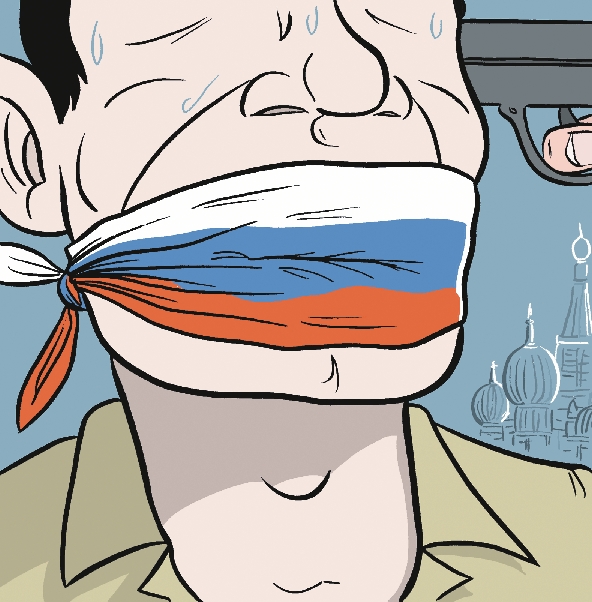
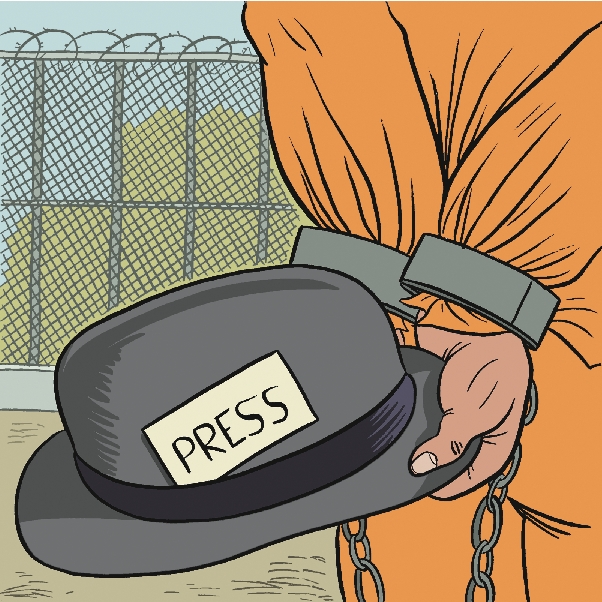
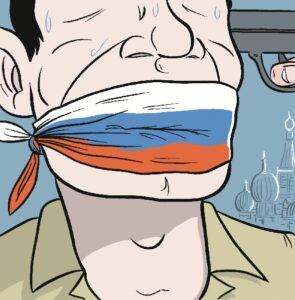
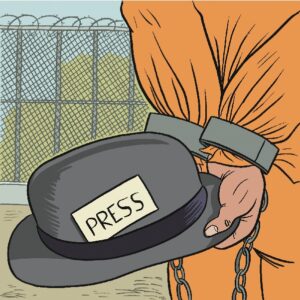
The Revolution Will Be Televised "Los medios de informacion son por el gobierno" can essentially be tranlated as "The media is manipulated by the government." That’s what teachers painted on one straw mat as they protested in Oaxaca’s square. On June 14, 2006, a police raid on the teachers turned the yearly strike into a broad social movement with implications for the entire country. The Popular Assembly of the People of Oaxaca (APPO) formed and demanded Gov. Ulises Ruiz Ortiz resign. All the straw banners were burned ["Oaxaca’s Reach," Nov. 9-15]. Hundreds of women marched, banging pots and pans, on Aug. 1 and occupied the Oaxacan state TV station and a radio station, discussing the APPO’s goals and showing clips of the June 14 raid. Oaxacan police attacked the station on Aug. 21, according to news reports. Many were wounded. In retaliation, the revolutionary movement took over 10 more radio stations, six on AM and four on FM. For more information, go to www.narconews.com. (MD) Rocket to Russia Anna Politkovskaya criticized her own government. If she’d been an American journalist, she might have got off with a few rhetorical taunts of treason. But Anna Politkovskaya was a Russian journalist, so she ended up dead. Almost two decades after the death of communism in the Russia, freedom of the press has become a joke in the country. A couple weeks ago, an organization of German investigative journalists bestowed Russian President Vladimir Putin with the uncoveted Closed Oyster award, designed to recognize the previous year’s biggest enemy of free speech. He is the first non-German to ever receive the dishonor. The group pointed out that 14 Russian journalists have died under suspicious circumstances since Putin came to power. In the immortal words of Bob Roberts, the times they are a-changin’ … back. (SRA) The Long Haul The grueling wait continues for captured British journalist Alan Johnston, who was kidnapped in Gaza in March of this year by a group calling itself the Army of Islam. In April, the group claimed to have executed him. Thankfully, this doesn’t seem to be the case. There’s some concern, though, that the group may have sold Johnston to a third party. Hamas, which controls the violence-plagued Palestinian territory, issued an ultimatum last week to Johnston’s captors. Unfortunately, the ultimatum was ignored, and Hamas did nothing to hold the thugs accountable. Earlier this week, a video of Johnston was released showing him with explosives strapped to his chest. More than one innocent person has been caught in the middle of the deteriorating situation in Gaza, but Johnston’s story is a poignant one, highlighting the terrifying threats posed to freedom of the press by radical Islamic groups in the Middle East. (SRA) An Even Longer Haul A cameraman from the Al Jazeera network named Sami al-Hajj has been incarcerated at Guantanamo for five long years. No charges have even been brought against the 38-year-old Sudanese native. At this point, odds are no charges ever will be brought against him. Last month, al-Hajj released a statement through his attorney requesting that Alan Johnston’s captors release their prisoner. (Hey, he has an attorney. What a novelty!) “As brothers in one faith,” al-Hajj said, “consider this gift that I request of you. While the United States has kidnapped me and held me for years on end, this is not a lesson that Muslims should copy." Al-Hajj has denied that he has any terrorist links. His colleagues at the Qatar-based Arabic TV network say that his incarceration is merely harassment by the United States government because of coverage deemed to be anti-American. (SRA) Hurricane Hugo Hugo Chavez is not a subtle man. Last month, he shut down a key opposition TV station that had been on the air for more than half a century. The station, which was the most popular one in the country, had its equipment confiscated and its content replaced with government-sponsored programming. Students came out by the thousands to protest Chavez’ action and riot police cracked down hard. A month before the shutdown, two-thirds of Venezuelans approved of Chavez’ job performance. After the shutdown, polls revealed that his popularity is plummeting. Venezuelans finally seem to be learning that their great revolutionary savior has totalitarian ambitions. This could end in a bloodbath. (SRA)Feature
 Jeremy Eaton
 Eric Garcia
Less is Not More
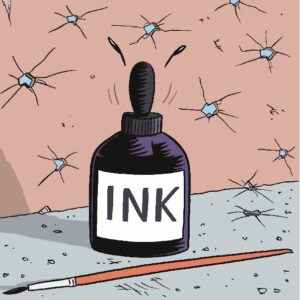
Neutral Toons Wussy editors are killing editorial cartoons, says David Wallis, author of Killed Cartoons. Wallis’ book gives us 100 op-ed toons stricken from papers in the last century. The industry is drying up ["More Than Pictures," May 24-30]. There were 275 full-time editorial cartoonists employed in 1957. There are 84 today. That can’t be a great business move in an era when audiences gnaw on snarky columnists and spitfire talk radio hosts. As papers struggle to sexify the news so it can keep up with short-attention-span infotainment, aiming budget cuts on editorial cartoonists is the last thing anyone needs. Why quiet the most incendiary voices? Sometimes inoffensive also means boring. (MD) Even More Classic Rock Hutton Broadcasting is purchasing Indie 101.5 FM, Radio Free Santa Fe on 98.1 FM and Blu 102.9. Indie 101.5, an employee-owned free-form station, will probably become yet another classic rock station on New Mexico’s dial. Also, the purchase puts Hutton at the Federal Communications Commission limit of four FMs and two AMs ["Radio Congeals," June 7-13]. "That would be the largest consolidation in Santa Fe as far as radio stations go," said Ellie Garrett, a founder of Indie. "It’s deeply disturbing that it literally eliminates the last of the independent FMs." What does consolidation mean to you? Fewer choices in news and music, essentially limiting your access to a variety of media. Go to indie1015.com or keepindiealive.com for more information. (MD) Consolidation, Part Deux Satellite radio giants Sirius and XM have put in an application with the FCC to merge. In the pro column comes the argument that the more stable economic situation for the hybrid company would drive industry innovation. Supporters say competition still exists with AM/FM radio and other online sources of music like iTunes. Former FCC Commissioner Gloria Tristani said the companies were granted special space by the FCC because they were competitors ["From One Who Knows," March 8-14]. "If there weren’t a Democratic Congress, that deal would go through much more quickly and without any kind of conditions," Tristani said. (MD) Radio Silence? On July 15, new rules enacted by the two-year-old Copyright Royalty Board are set to go into effect, raising the rates Internet-based radio stations pay by between 300 and 1,200 percent. Currently, webcasting companies pay a percentage of their revenue as royalties to the artists, record labels and songwriters of the songs they broadcast. Under the new, even harsher legislation, webcasters will be forced to pay an exorbitant “per song” royalty (retroactive to Jan. 1, 2006). The additional fees for just one webcasting service, Live365, have been estimated at $4.2 million for fiscal year 2006. This unprecedented rate increase, aggressively pushed forward by the Recording Industry Association of America, will effectively drive all Internet radio stations out of business. Counter-legislation titled The Internet Radio Equality Act has been introduced in the House and the Congress, but time is running out. Check out www.savenetradio.org for updates. (DO’L) Free Press (Just Pay Shipping and Handling) Our Founding Fathers felt freedom of the press was so important to democracy that the single most subsidized industry in early America was the U.S. Postal Service, ensuring newspapers, magazines and pamphlets were widely and cheaply distributed. Recently, however, media giant Time Inc. (the periodicals branch of Time Warner) helped the Postal Regulatory Commission re-write our country’s postal rates. The new postal rates, which go into effect in July, are—coincidentally, we’re sure—very favorable to Time Inc.’s publications. The new rates are not based on weight but on size. Larger publications, like those favored by Time Warner, will face an overall increase of 11.1 percent. Smaller publications will see an overall increase of 11.7 percent. But that’s just the beginning: The new postal rates also factor in packaging, co-mailing, shape, distance traveled and editorial weight vs. advertising weight. Price breaks, for example, are given to publications that are sent out on palettes instead of in plastic bags—something only mass media mags like Time can afford to do. Smaller publishers say they’re looking at operating cost increases that range upwards of 30 percent. Teresa Stack, president of the liberal weekly The Nation, has joined publishers of 15 other small opinion-oriented periodicals, such as The New Republic and National Review, to urge the Postal Board of Governors to reconsider the rate structure. (DO’L) Killing the Messenger = Killing the Planet When the Bush administration gets wind of bad news, its response usually involves jamming a few fingers into its ears and chanting, "I can’t hear you! I can’t hear you!" A few weeks ago, it adopted a new strategy: simply kill the messenger.Faced with mounting evidence of melting ice caps, rising sea levels, escalating surface radiation and saturated atmospheric carbon dioxide, the Department of Defense is taking down satellites that have been invaluable in monitoring global climatic change. (Which also begs the question: What in blazes is the Pentagon doing at the helm of our environmental monitoring program?)At present, the United States collects global weather and climate data through six satellites in three orbits. By 2026, just four "weather forecasting" satellites will orbit the Earth in two trajectories. Furthering the information blackout, seven additional climate sensors will either be abandoned or significantly diminished by lesser-quality equipment in order to save money, according to a leaked report to the White House obtained by the AP. (LM)Feature
 Eric Garcia
Official Harassment
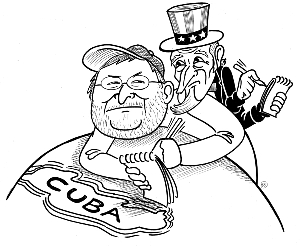
Moore Trouble It’s no secret that George Bush hates Cuba. Since he took office, the administration has cracked down on the island nation, restricting travel and rescinding visitation rights of ex-patriots. Now Academy Award-winning filmmaker Michael Moore is under investigation by the U.S. Treasury Department for taking ailing Sept. 11 rescue workers to Cuba for a segment in his new health-care documentary SiCKO. (The film uncovers, among other things, that medication costing $120 in the U.S. will set you back a whole five cents in Havana.) The Treasury Department’s Office of Foreign Assets Control notified Moore in a letter dated May 2 that it was conducting a civil investigation for possible violations of the U.S. trade embargo restricting travel to Cuba.Moore had sought official permission to travel there under a provision for full-time journalists, but OFAC insists, “no determination had been made.” No word on what criminal penalties Moore could face, although the filmmaker did go so far as to store a print of the film outside the U.S. in case the government tried to seize it. In 2002 and 2003, director Oliver Stone visited Cuba to make two documentaries about dictator Fidel Castro. Stone’s production company was fined roughly $6,300. (DO’L) Investigative Terrorist? The U.S. government has never been a big fan of investigative reporter Greg Palast—who’s perhaps most famous for revealing the Republican Party’s malfeasance in Florida during the 2000 election. But on Sept. 11, 2006, the Department of Homeland Security went a step beyond, filing criminal charges against Palast and television producer Matt Pascarella for filming Exxon Mobil‘s Baton Rouge refinery, located close to where 1,600 Katrina survivors were stationed. Homeland Security claimed the video might aid terrorists. A few days later, the charges were dropped, but the incident is yet another instance of the government dissuading the media from doing its job. For more grisly details, visit www.gregpalast.com. (CC)Feature
 Jeremy Eaton